

I found Scooter's Coffee most useful when I treated it as a practical shortcut for a coffee run rather than as a complete replacement for every way of ordering. The app brings together mobile ordering, payment, scanning, status progress, and rewards in one place, which makes repeat visits noticeably easier. My overall view is positive: it is a focused Food & Drink app for people who already buy from Scooter's Coffee often enough to benefit from a smoother routine, but it is less compelling for someone who visits only occasionally or prefers comparing several cafés before choosing.
That distinction matters because the app’s value is tied closely to the Scooter's Coffee experience. It is free, available to Everyone, and developed by Scooter's Coffee, so there is no subscription decision or separate service to learn. Its store presence is also well established, with more than a million installs and an average rating of 4.3 from roughly four thousand ratings. Those figures suggest a substantial user base, but they do not change my main conclusion: the app succeeds because it removes small points of friction from a familiar purchase, not because it tries to do everything.
How the app works in an everyday coffee routine
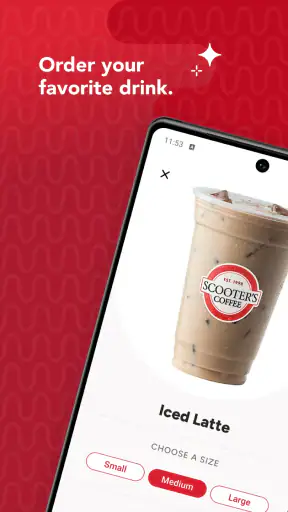
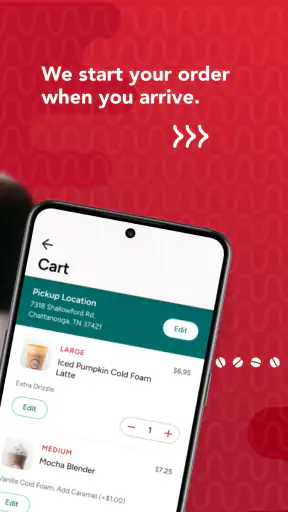
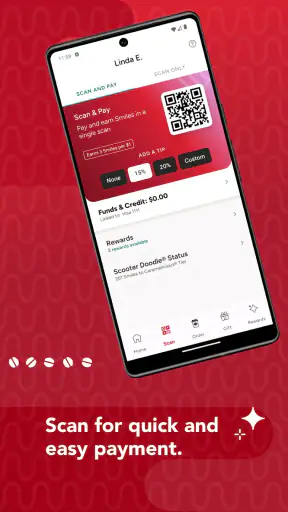
The first thing I would do after installing it is check whether my usual Scooter's Coffee location is convenient for mobile ordering. The central workflow is straightforward: choose what I want, place the order ahead, then either pay through the app or use the app to scan during a visit. That gives the app two different roles. It can help me avoid waiting when I know exactly what I want, or it can act as a rewards and payment companion when I am already standing at the counter.
That flexibility is more useful than it may sound. Some mornings I want to repeat a familiar drink without rebuilding the order while a line forms behind me. On another visit, I may be meeting someone and prefer to browse at the store before deciding. A good coffee app should support both habits instead of forcing every customer into mobile ordering, and Scooter's Coffee makes the pay-or-scan approach part of its basic appeal.
A realistic example would be a weekday commute. I can open the app before leaving home, select the location that fits my route, place the order ahead, and arrive with a clearer idea of what to expect. If I change my mind and decide to order in person, the scanning option keeps the rewards side of the visit connected to the same account. The important benefit is not simply speed; it is having fewer separate steps to remember when I am tired or in a hurry.
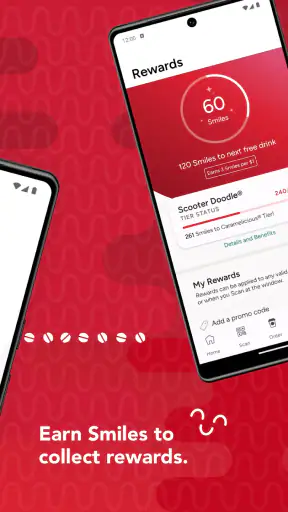
I also appreciate that the app is built around status and exclusive rewards rather than treating loyalty as an afterthought. For a regular customer, that can make the difference between using the app once and keeping it installed. The strongest use case is someone who already has a predictable Scooter's Coffee habit and wants purchases, progress, and ordering in one place.
The strongest part is the combination of ordering and loyalty
Many café apps are good at one task but awkward at the other. Some are mainly digital menus with a rewards tab added on, while others make loyalty easy but leave ordering feeling like a slow checkout form. Scooter's Coffee has a more coherent purpose: it connects the decision to order ahead with the reason to return. I found that combination more persuasive than any single screen or button.
The pay-or-scan choice is especially useful for people whose routines change from day to day. If I am rushing, ordering ahead is the natural option. If I am already inside, scanning avoids the feeling that I need to start a separate transaction just to receive the benefit of using the app. This is one of the less obvious strengths because it supports two different customer behaviors without making either one seem like a workaround.
Another practical tip is to decide before opening the app whether the goal is speed or discovery. For speed, I would go straight to the familiar order and review it carefully before submitting. For discovery, I would browse with more time and avoid trying to make a rushed decision at the pickup point. Separating those two modes reduces mistakes and makes the app feel more predictable.
The rewards and status elements also give regular visits a visible sense of progress. I would not recommend buying coffee solely to chase an in-app benefit, but if Scooter's Coffee is already part of my routine, seeing that activity organized in one account is convenient. It is easier to judge whether the app is worthwhile when I look at it as a record of visits I would have made anyway, rather than as a reason to create extra visits.
Where it compares well with ordinary ordering
Compared with walking into a café and ordering from scratch, the app’s advantage is preparation. I can make the decision away from the counter, review the order with less pressure, and use the same account for payment or scanning. That is valuable during a commute, on a short break, or when I am coordinating a pickup for myself and do not want to spend the whole break waiting.
Compared with a broad delivery or restaurant marketplace, the app has a narrower but cleaner purpose. I am not browsing unrelated restaurants or weighing delivery options; I am dealing directly with Scooter's Coffee. For a customer who already knows the brand, that focus can be better than opening a general marketplace and navigating through extra layers. The trade-off is obvious: the app is not the right tool when I want to compare nearby coffee shops, combine an order from another restaurant, or choose a service based on broad local selection.
There is also a subtle advantage in keeping loyalty attached to the brand’s own app. A general ordering service may be convenient for discovery, but it can make the rewards relationship feel secondary. Here, the status and exclusive rewards are part of the reason to use the first-party experience. For devoted Scooter's Coffee customers, that direct connection is more meaningful than a marketplace that happens to list the same store.
The meaningful weakness is dependence on a familiar routine
The app’s focus is also its main limitation. If I do not regularly visit Scooter's Coffee, the rewards and status features have less practical value, while the ordering function may not justify another app on my phone. Someone who prefers independent cafés, changes destinations often, or wants a single app for many food businesses will probably get more from a broader alternative.
Mobile ordering can also create its own kind of friction. It is easy to assume that placing an order ahead always saves time, but that depends on choosing the correct location and allowing enough time for the visit. If my plans change, the convenience can disappear quickly. I would double-check the selected store and the order details before confirming, especially when I am traveling between different parts of town or ordering during a busy morning.
The pay-or-scan choice is helpful, but it means I still need to decide which path fits the visit. That is not a serious flaw, though it does show that the app does not eliminate every decision. I still need to pay attention at checkout, remember to scan when ordering in person, and avoid assuming that an order-ahead workflow is automatically better than speaking with staff.
I would also be cautious about using the app as my only way to interact with the store. A mobile order is efficient for a known routine, but in-person ordering is better when I need to ask questions, explain an unusual request, or make a decision after seeing the available choices. The app works best when it complements judgment rather than replacing it.
Small workflow habits that make a difference
My first recommendation is to use order ahead for repeat purchases, not for every visit by default. When I already know the drink and timing, the app feels genuinely useful. When I am experimenting or unsure about what I want, ordering in person is often simpler and gives me more room to adjust.
My second recommendation is to treat the pickup location as a deliberate choice, not a minor detail. A quick order placed for the wrong store is worse than a normal counter order because the mistake is discovered later. I would pause at the location step, especially before commuting or when several Scooter's Coffee locations are part of my regular routes.
My third recommendation is to use the app’s loyalty tools as a convenience record rather than a spending target. Status and exclusive rewards can make regular purchases feel more organized, but they should not encourage me to buy something I did not want. That approach keeps the rewards useful without allowing the reward system to dictate my routine.
Finally, I would keep the app updated when possible. The current version is 6.1.17 and requires Android 10 or later. That requirement is reasonable for many modern phones, but it is still worth checking compatibility before relying on the app for a time-sensitive order. On an older device that cannot meet the minimum operating-system requirement, the ordinary in-store route may be the more dependable choice.
Who will get the most from it
I think the best audience is a regular Scooter's Coffee customer who wants three things together: order-ahead convenience, a way to pay or scan, and a clearer connection to status and rewards. Commuters are a natural fit because the app can move the ordering decision earlier in the journey. Office workers may also appreciate it when a short break leaves little room for waiting, provided they choose the correct location and allow realistic pickup time.
It can also suit households or friend groups when one person repeatedly handles the coffee run. The useful part is not that the app magically organizes a group order; rather, the person placing the order can prepare the purchase before reaching the store and keep the transaction connected to the account. I would still review every item before submitting, because convenience is only helpful when the final order matches what everyone actually wants.
Less frequent visitors should think about whether the loyalty features will matter enough to justify installing another app. If I stop at Scooter's Coffee only when convenient, a normal in-person order may be faster overall because I do not need to open an account, browse the menu, or manage another rewards system. Likewise, people who want delivery comparisons, restaurant variety, or café discovery should look beyond this focused first-party option.
The age rating of Everyone makes it broadly approachable, and the app is free to install. Those points remove two common barriers, but they do not make it universally useful. The real question is behavioral: do I repeatedly buy from Scooter's Coffee, and would ordering, paying, scanning, or tracking status make those visits easier? If the answer is yes, the app has a clear role. If not, its narrow focus becomes more noticeable.
Reliability, maturity, and what the numbers suggest
Scooter's Coffee has been available since December 11, 2016, so this is not a brand-new experiment. Its current version, 6.1.17, indicates an app that has continued through multiple revisions rather than remaining frozen in its original form. I would still judge it by my own local ordering experience, because the usefulness of any café app depends on how well the digital workflow fits the specific visit.
The app has a 4.3 average from about 4.1 thousand ratings, alongside roughly 2.1 thousand written reviews. I see that as encouraging but not definitive. A rating can tell me that many people find the app worthwhile, while the written feedback is more useful for spotting recurring frustrations around ordering, payment, or rewards. I would read those comments with my own routine in mind instead of assuming every experience will match mine.
The scale of more than one million installs also makes the app feel like a serious part of Scooter's Coffee’s customer experience rather than an obscure side project. Still, popularity should not be confused with a perfect fit. A widely used app can remain unnecessary for someone who rarely visits the brand, and a focused app can be excellent for regulars without being the best general coffee-ordering tool.
My final recommendation
I recommend Scooter's Coffee to people who already choose this coffee chain regularly and want a single place to order ahead, pay or scan, and keep an eye on status and exclusive rewards. In my experience, its strongest quality is the way those tasks support one another. The app is most satisfying when it becomes part of a repeat routine: decide early, check the location, submit a familiar order, and use the account consistently.
I would skip it if my coffee habits are spread across many cafés, if I rarely visit Scooter's Coffee, or if I mainly need a marketplace for comparing food and drink options. In those situations, the app’s focused design is a limitation rather than a strength. I would also choose in-person ordering whenever I need to ask questions, change details at the counter, or make a spontaneous decision.
Overall, I see this free Food & Drink app as a practical companion rather than an essential download for everyone. Its best value comes from reducing repeated effort, not from replacing the café visit itself. For the right customer, that is enough: the ordering shortcut, scanning option, and loyalty connection make regular Scooter's Coffee stops easier to manage. For everyone else, the ordinary ordering process—or a broader alternative—may be the better fit.


